
This year, there is a new urgency to our work.
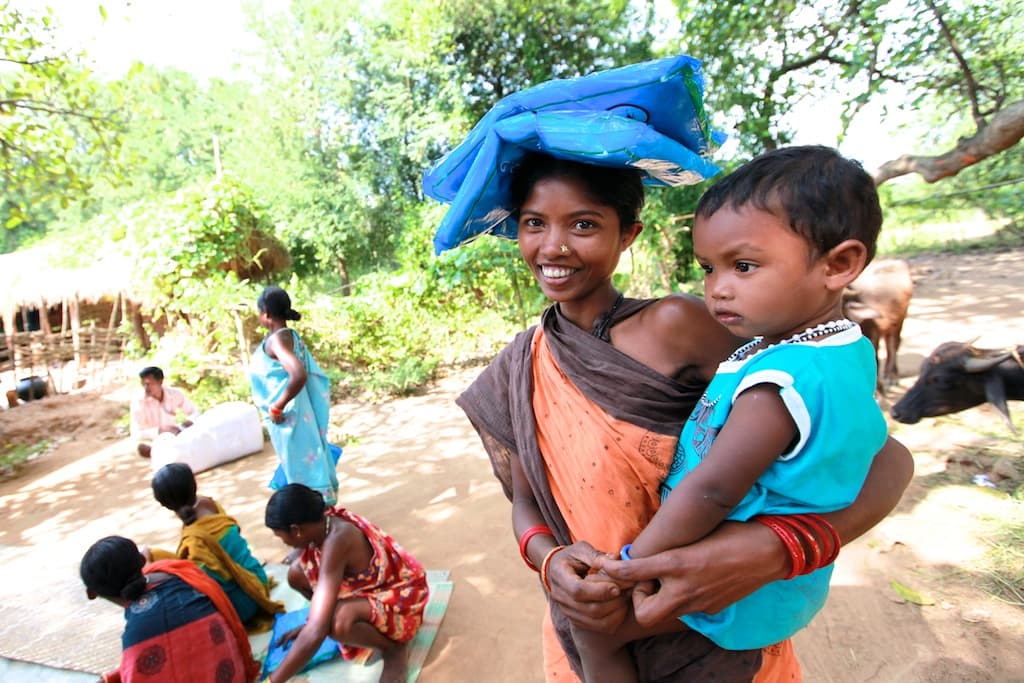 Photo courtesy of Against Malaria Foundation
- Written by
- Frank Fredericks
- Published on


You all know the power of effective giving. Year after year, we have preached the good message that you can have a disproportionate impact through effective giving. You know that every $4,500 you give to Givewell’s top charities can save the life of someone, most often children under the age of five.¹
And it’s not that you know what we know, but you believe what we believe, that stopping preventable deaths of children is one of the greatest ways we can be of service to humanity. That’s why so many of you have committed to the 1% Pledge, many of you giving for years, averting numerous deaths through your consistent generosity. That’s why I wanted to share about the USAID cuts over a year later, the effects of the significant cuts, and how we as individuals can step up and help out.
For those unfamiliar, USAID was the primary conduit of funding from the US federal government to international development initiatives. Formed in 1961, USAID’s budget in 2024 was approximately $44B, with about $40B of that in direct funding to programs outside the agency.² In 2024, the funding focused on governance and anticorruption ($16B), humanitarian support ($10.5B), public health ($9.5B), and smaller investments in agriculture, education, infrastructure, and economic growth broadly. Within public health, cuts included over $6B from HIV/AIDS work, $1B from maternal and natal health, $800M from malaria, and $400M from tuberculosis.³
USAID was just 0.6% of the US federal budget, though most Americans assume it to be much higher.⁴ Consequentially, this small part of the US federal budget represented about a fifth of all international development spending worldwide.⁵ Instead of upping their development budgets to help fill the gap, many other countries have lowered their international aid as well, further exacerbating the harm.⁶
Researchers estimate these cuts led to the death of an additional 550,000 children under the age of five around the world. This increased preventable child deaths by an estimated 11%, the first increase in this figure in a generation.
This isn’t to suggest that USAID was without valid criticism. In fact, I would agree with sentiments that USAID was long overdue for reform. But if you want to remodel a house, you don’t hire an arsonist.
The effects have been catastrophic, despite many private foundations working tirelessly to raise additional funding. Researchers estimate these cuts led to the death of an additional 550,000 children under the age of five around the world. This increased preventable child deaths by an estimated 11%, the first increase in this figure in a generation.⁷ This is the moral failure of our generation, worthy of our righteous anger.
In addition to dedicating my professional career to this issue, I’m also a 1% Pledger myself. Like many of you, I have a portfolio of causes and issues that I’m passionate about and support, including commitments I make as a member of other nonprofit boards. But beyond my work at One For the World, I felt the developments of the last year required me to reevaluate my giving. As a result, I have doubled my commitment to funding preventable child deaths. And many other donors have followed suit, some giving increased amounts or percentages, with some committing 10% or more of their income to this cause area alone. I don’t suggest there’s any one right percentage for everyone, but rather, it’s a moment to consider rebalancing our philanthropic commitments.
This is not a solicitation for you to double your commitments. With economic uncertainty and competing cause areas worthy of prioritization, there’s not a one size fits all approach to giving. Rather, I invite you to reevaluate your giving portfolio and see if, given the outcomes of these cuts, you also feel compelled to change your giving strategy.
We know more than ever that we cannot rely on our governments and international agencies to fulfill our moral obligations to one another. It’s upon us. I invite each of you to consider what this moment asks of us.
Notes
- GiveWell, “Top Charities Fund,” accessed September 24, 2026, https://www.givewell.org/charities/top-charities.
- Congressional Research Service, U.S. Agency for International Development: An Overview, IF10261, updated September 5, 2025, https://www.congress.gov/crs-product/IF10261.
- ForeignAssistance.gov, “Foreign Assistance Data,” U.S. Department of State, accessed September 24, 2026, https://foreignassistance.gov/data; Congressional Research Service, U.S. Agency for International Development: An Overview, IF10261, updated September 5, 2025, https://www.congress.gov/crs-product/IF10261.
- The Century Foundation, “The Foreign Aid Wipeout: A Shadow Revolution in America’s Middle East Policy,” 2025, https://tcf.org/content/report/the-foreign-aid-wipeout-a-shadow-revolution-in-americas-middle-east-policy/.
- Organisation for Economic Co-operation and Development, Preliminary Official Development Assistance Levels in 2024, April 2025, https://www.oecd.org/en/publications/2025/04/preliminary-official-development-assistance-levels-in-2024.html.
- Organisation for Economic Co-operation and Development, Cuts in Official Development Assistance, June 2025, https://www.oecd.org/en/publications/2025/06/cuts-in-official-development-assistance_e161f0c5/full-report.html.
- D. M. Cavalcanti et al., “Evaluating the Impact of Two Decades of USAID Interventions and Projecting the Effects of Defunding on Mortality Up to 2030,” The Lancet 406, no. 10500 (2025): 283–294, https://doi.org/10.1016/S0140-6736(25)01186-9.